
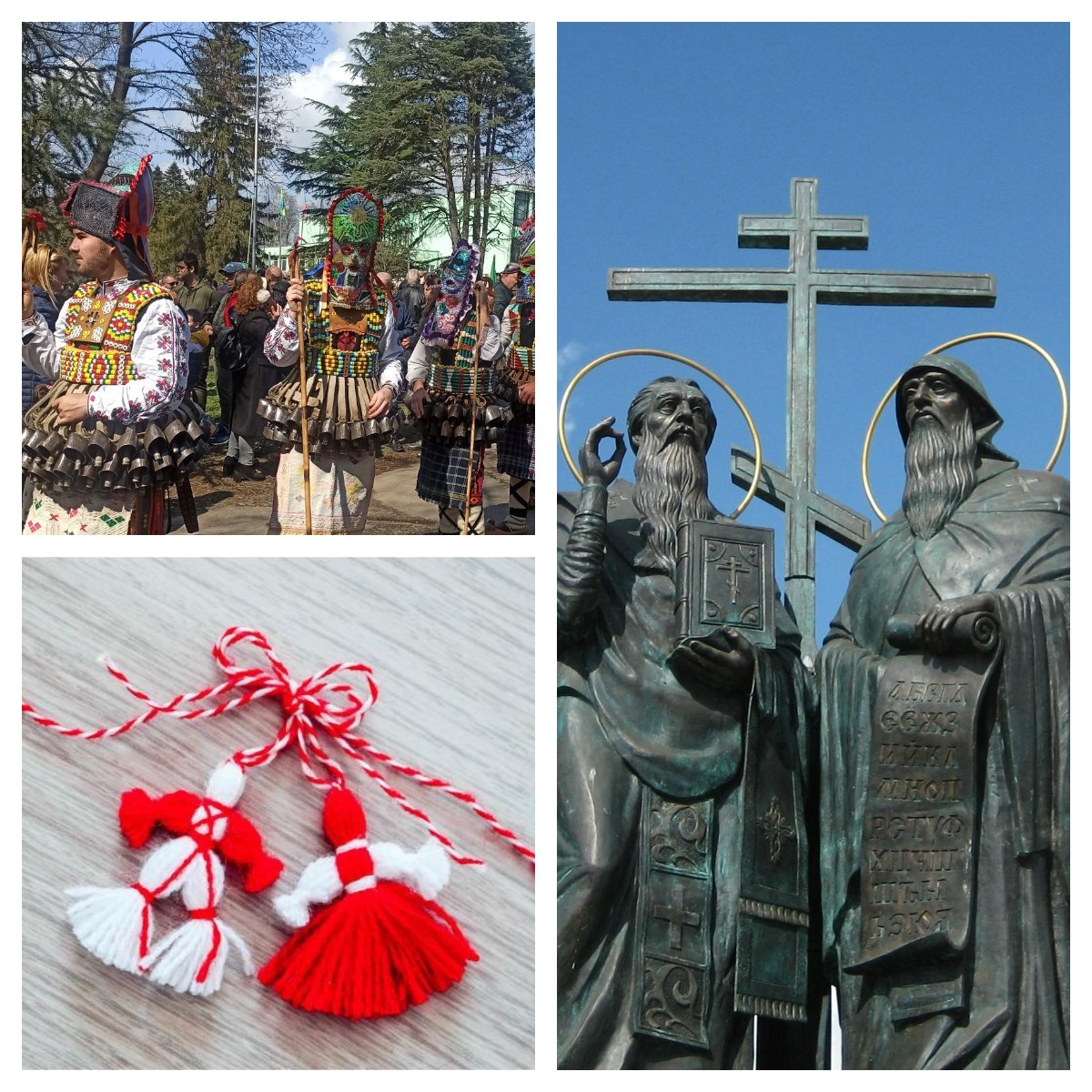
Kukeri holiday. The most interesting and colorful custom in the Bulgarian calendar of traditions is the Kukeri holiday. The history of the holiday is rooted in Thracian mythology, in the period when people worshiped the forces of nature, recognized the cyclical rhythms of life - birth and death. The holiday is directly related to the symbolic expulsion of evil forces and the attraction of fertility, good luck, health for the whole year. People believed that with the help of ritual dances and the ringing of bells it was possible to exorcise evil spirits and attract the forces of nature, so that during the year there would be a rich harvest. The main characters of the holiday are unmarried men and boys - kukeri, dressed in masquerade costumes. Kukeri dance is a unique and mystical unity of rhythm, sound and color. The dancers move with a specific step, wear distinctive costumes, frightening masks, behind which they hide their faces, and make the neighborhood ring with the sound of hundreds of bells mixed with spells and blessings for health and fertility. By dressing up in various monstrous animal guises, people seek to protect themselves and resist the invasion of dangerous forces into their world. The masquerade is more than just an attractive carnival, as it has deep occult significance, symbolically representing the duality of life as manifested through death and rebirth. Apart from the carnival procession during the festival, there are obligatory fairs in the squares of towns and villages where traditional local food and drinks, utensils, clothes and souvenirs are served.
Baba Marta. Every year on March 1 in Bulgaria celebrate one of the most beautiful holidays - the day of the arrival of spring. The symbol of the holiday is the martinitsa, a white and red thread that are twisted together. Each color has its own meaning: red - blood and life, symbol of femininity and health, white - purity and happiness, symbol of masculinity and strength. In different regions of Bulgaria, blue and green threads may be added to the martinitsa, coins - symbol of prosperity, blue beads - against the evil eye. The martinitsa is tied on the left hand or attached to the clothes and removed when they see the first blossoming tree or the first migratory bird, that is with the onset of spring. The martinitsa is removed from the hand, tied on the tree, wishing prosperity, health and fulfillment of cherished wishes. In homes, hostesses try to decorate the house with red-and-white tablecloths, lay out paths with a red-and-white pattern, in clothing prevail red-and-white colors.
The Feast of Saints Cyril and Methodius is the most revered holiday. And it is justified. The works of the holy brothers Cyril (827-869) and Methodius (815-885), who in the IX century created the Slavic alphabet (Glagolitic alphabet), laid the foundations of a new civilization, which later became two cultural worlds - Pax Slavia Orthodoxa and Pax Slavia Catholica.The works of the holy brothers in the Middle Ages, which without exaggeration can be called a cultural feat, played a fundamental role in the formation of ethnic identity of the Slavs. In Bulgaria (and not only), Cyril and Methodius are a symbol of national spirituality and enlightenment, as well as a source of self-confidence and pride. The continuity between their work and Bulgaria is one of the main ideas on which the construction of Bulgarian national identity and the modern Bulgarian state is based. The celebration of this holiday began in the middle of the nineteenth century. The structure of the holiday of the XIX century does not differ much from its celebration today. The holiday consists of religious rites (consecration of water), gathering flowers and weaving wreaths, greetings and congratulatory speeches from community leaders, solemn student processions with icons and portraits of the two saints to the sounds of the hymn Cyril and Methodius (written in 1892 by Stoyan Mikhailovsky, and the melody - in 1901 by Panayot Pipkov). In Sofia, the celebration is concentrated in the intellectual center of the city - the National Library "Saints Cyril and Methodius", and in other Bulgarian cities - in central squares and in the courtyards of school and community centers.
Want to take part in the celebrations yourself - come to Bulgaria, buy an apartment and be in the center of the events /rooms/two
I want to know more about current real estate offers